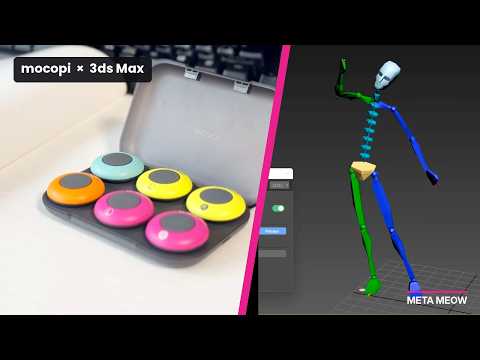
Motion capture technology has traditionally been locked behind expensive studio setups and complex hardware. However, Sony’s mocopi system is challenging that status quo by offering a mobile, lightweight solution. The big question for industry professionals remains: can a portable sensor system truly fit into a high-end production environment? We took a deep dive into how this system integrates with Autodesk’s flagship software using the official 3ds Max plugin.
Breaking Down the Sony mocopi System
Sony mocopi consists of six small, lightweight sensors worn on the head, wrists, hips, and ankles. Unlike traditional optical systems that require dozens of cameras, mocopi uses internal IMU (Inertial Measurement Unit) technology and AI to calculate body positioning. While originally marketed toward VTubers and social creators, the introduction of the dedicated 3ds Max plugin has shifted the conversation toward professional 3D animation and game development.
Seamless Integration and Workflow
The real magic happens during the data transfer. By utilizing the Sony 3ds Max plugin, animators can bridge the gap between physical movement and digital character rigging. The setup allows for two primary workflows: 1. Live Streaming: Capturing motion in real-time and seeing it reflected immediately on your 3ds Max character rig. 2. Recorded Data Import: Recording a session on a mobile device and importing the motion data for further refinement and polishing.
Testing showed that the plugin handles the data stream with impressive stability. For pre-visualization (previz) or indie game projects, the ability to jump from a standing start to a recorded animation in minutes is a massive productivity boost.
Is it Professional Grade?
While it may not replace high-end, multi-thousand-dollar optical rigs for blockbuster films, the mocopi system combined with the 3ds Max plugin is a game-changer for independent creators and small studios. It excels in environments where space is limited and speed is a priority. The software does a commendable job of filtering "jitter," though some manual cleanup in the Curve Editor is still expected for high-fidelity results.
Conclusion
Sony mocopi is more than just a consumer gadget; it is a legitimate tool for the modern animator's arsenal. If you are looking to speed up your character animation pipeline without breaking the bank, exploring the capabilities of this mobile mocap system and its integration via the 3ds Max plugin is highly recommended. It represents a significant step toward the democratization of motion capture technology.


