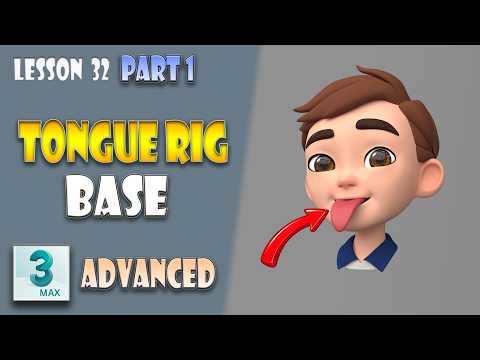
Achieving believable facial expressions is a cornerstone of high-quality character animation. While eyes and mouth shapes often get the most attention, the tongue is a crucial—yet frequently overlooked—component of realistic speech and expression. In this guide, we explore the final stages of skeletal setup to build a robust, production-ready tongue rig.
Building the Skeletal Foundation
A professional tongue rig starts with a solid bone hierarchy. Unlike simple props, the tongue requires a flexible chain capable of handling complex deformations such as curling, rolling, and stretching. By positioning the base joints accurately at the root of the mouth, you ensure that the tongue moves naturally in sync with the jaw. This skeletal foundation is essential for preventing "mesh tearing" during extreme poses and ensuring the geometry stays fluid during dialogue scenes.
Implementing Intuitive UI Controls
A rig is only as effective as its usability. Animators need intuitive ways to manipulate a character without clicking through a cluttered viewport of bones. This is where UI controls become vital. By setting up custom attributes and wire parameters within 3ds Max, you can create a centralized control panel for the tongue's movement. These sliders and manipulators allow for quick adjustments to the tongue’s tip, mid-section, and base, streamlining the animation workflow and ensuring consistency across different shots.
Why a Robust Setup Matters
Transitioning from a basic setup to a professional-grade rig involves refining the interaction between the skeletal structure and the user interface. Using 3ds Max for this process allows you to leverage powerful constraints and skinning tools to ensure the rig can withstand the rigors of a full production pipeline. A "production-ready" rig means it remains stable even under extreme animation requirements, allowing the character to transition seamlessly from subtle movements to exaggerated expressions.
Conclusion
Mastering these advanced rigging techniques in 3ds Max will elevate your character's performance and bring a new level of detail to your facial animation projects. Whether you are working on a cinematic short or a high-end game, a well-controlled tongue rig is a small detail that makes a massive impact on the final output. By focusing on both the underlying skeleton and the animator-friendly controls, you set the stage for truly expressive characters.


