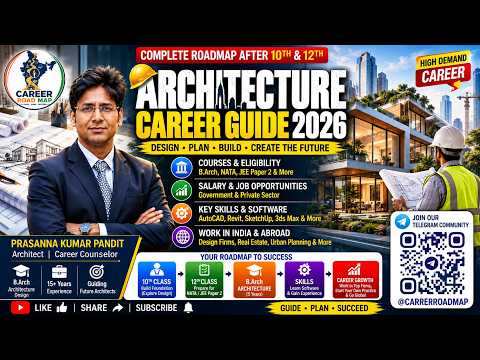
Architecture is the perfect blend of creativity, technology, and engineering. If you have a passion for designing structures and shaping the skylines of the future, becoming an architect is one of the most rewarding career paths you can choose. As we look toward 2026, the industry is evolving rapidly, moving beyond traditional blueprints to immersive digital experiences.
The Educational Roadmap
The journey to becoming a licensed architect typically begins with a Bachelor’s degree in Architecture (B.Arch). This is a five-year program that covers everything from structural mechanics to the history of design. In many regions, you will need to clear entrance exams like NATA or JEE Main Paper 2 to secure a seat in a reputable college. During these years, students learn the fundamentals of spatial planning and sustainable design.
The Power of Digital Tools
In the modern era, knowing how to draw by hand is a great skill, but mastering professional software is what gets you hired. To stand out in the competitive 2026 job market, you must be proficient in 3D modeling and rendering. Proficiency in 3ds Max architecture is particularly valuable, as it allows architects to create high-end, photorealistic visualizations of their projects.
By utilizing 3ds Max architecture, you can simulate lighting, materials, and environment, giving clients a realistic preview of the building before construction even begins. This level of detail is now an industry standard for top-tier firms globally.
Career Scope and Salary in 2026
The demand for architects is projected to grow as urbanization increases and the world shifts toward "Green Building" and smart city initiatives. In 2026, a fresh architecture graduate can expect a starting salary ranging from $45,000 to $65,000 annually (or ₹4-6 LPA in India), depending on their portfolio and location. However, senior architects and those specialized in building information modeling (BIM) or advanced 3ds Max architecture visualization can earn significantly higher, often reaching six-figure salaries in major metropolitan hubs.
Conclusion
Becoming an architect requires a long-term commitment to learning, but the results are worth it. By combining a solid educational foundation with mastery over modern tools, you can build a future that is both financially stable and creatively fulfilling. Start honing your design skills today to lead the architectural revolution of 2026!


